Cycling survey

Are you 60 years or older, and have you recently visited Barcelona? Let us know if you would consider cycling here. Have you done so? Let us know about your experience!

Do you want to read more about our study? Then this page is for you as well! Read here about our vision and objectives, and about your opportunities to participate.

Why participate?

At the Rovira i Virgili University in Tarragona (Faculty of Tourism and Geography) we’re carrying out a research about sustainable mobility transformations in European tourist cities. We consult the views of Barcelona’s residents and visitors of 60 years and older, with the objective to improve the use of active travel options for people of all ages. Our main interest is in your experience when cycling in Barcelona and whether, in your opinion, it contributes to your feelings of health, wellbeing and satisfaction with the urban environment.

So share your experiences with us! It doesn’t matter if you have cycled during your stay or if you cycle in your home country. All views matter!

What will we do?

The research consists of two phases. First, we ask you to fill in a small survey about cycling in Barcelona and about your stay in the city. Second, and completely optionally, you are welcome to join a conversation about three things: 1) your experiences of cycling in Barcelona; 2) the modes of transport you have used throughout your life; 3) and your ideas about your mobility in future years. The conversation can be over coffee or lunch, during a guided tour through the city, or via a video call. If you have travel companions they are welcome to join!

Naturally, we will treat the data from these activities with the utmost security: see below for details about your anonymous participation and confidentiality.

When and where?

Take the survey, which will take about 5-7 minutes (Survey) or fill in the registration form to meet us for a conversation: https://forms.gle/36GxAcuHWZGHH1768. At your convenience, we can meet in person or via video call.

In application of the GDPR regulations, we inform you that the data provided will be included in the records of the ENTOURAGE project, carried out by the Department of Geography of the URV. You authorise the processing of your personal data to be sent information about the activities of the project. You will be presented with an information sheet and consent form to indicate your preferences. The data will not be transferred to third parties except in cases of legal obligation. You have the possibility of exercising your rights of access, rectification, cancellation and opposition of the data you provide, under the terms included in the current legislation, by writing to wilbert.denhoed@urv.cat.

Choose your preferred language to read more about the EN-TOUR-AGE project by clicking on a button below
Labour mobilities

August 2021 was not a regular summer month. My new job in Spain meant that I had the pleasure of moving from Rotterdam to Barcelona. In this day and age, traveling (far) is no longer an everyday task, but requires careful consideration of its environmental and health effects.

This is a re-post of a Linked-In story (September 2021)
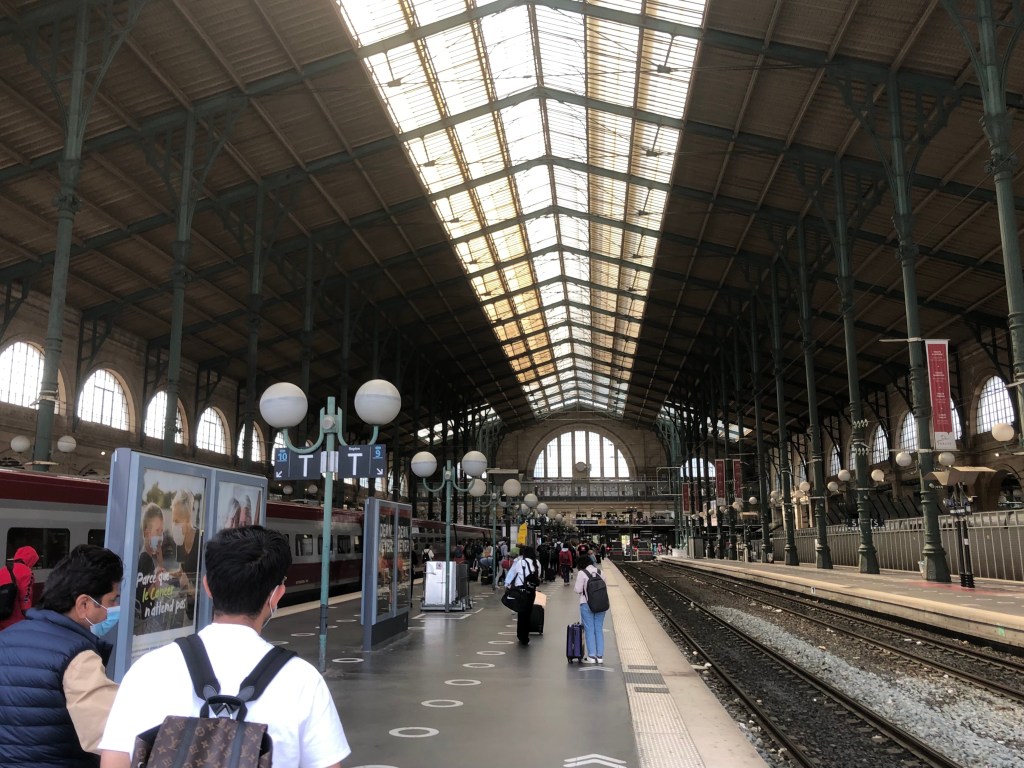
Gare du Nord, Paris (author’s image)

We took the train

I will save you the details of how we got to the point of this move, and how we solved the logistical puzzle of concurrently vacating a flat and finding a new one in another country during COVID. We did it before, and yes it’s complicated. But there’s one thing we hadn’t done before. A new experience. And hopefully a glimpse into the new future of intra-continental travel. We took the train.

Why?

The estimated CO2 emissions from a one-way trip by plane from Amsterdam to Barcelona are around 190 kgs per person. By train, the amount is 19 kgs. Let that sink in for a second.

If all 1.5 million people flying between Amsterdam and Barcelona (in a pre-pandemic year) were to take the train, it would save a staggering 510 million kg of CO2-emissions. I.e. the yearly emissions of 20,000+ households. Let that sink in again.

With that knowledge, it would be impossible not to take the train. In the face of the climate emergency, it would be foolish to fly right? But is it realistic? Doesn’t the train take too long? Isn’t it uncomfortable?

Define travel time

First: the collective benefit of the decision to take the train is undeniable. You don’t shove the effects of climate change to future generations, or make use of the unjust competitive (tax) advantages for airline operators.

Second: let me share my experience of the personal benefit. Rotterdam > Paris > Barcelona took 11 hours. A lot? Let’s look at the (unsustainable) alternatives. To cover those 1470 kms by car would take you 15 hours. Add resting stops, petrol and toll costs, the car itself, and it seems a slightly mad undertaking in terms of time and costs. 15+ hours of driving likely means an overnight stay, too. The plane then. The flight is just two hours, right? Well really, Rotterdam > Schiphol > checks and waiting > flight > El Prat > Barcelona centre takes at least six hours, maybe more with check-in luggage.

But what really made the difference is what we did during those 11 hours. This is won time! I read a book, sat comfortable, texted friends about our move, got fresh coffee, saw the landscape, chatted to fellow passengers, and had lunch with an old friend on a Paris terrace. Bonus: our pet could easily travel with us.

Where now?

There’s probably a lot of academic and policy knowledge that fits this story, and there’s equally a lot to say about our apparent need to be hyper-mobile. One should always remain self-critical. We did take a plane when we went looking for housing, as we only had 4 days away from work. Plus, trains aren’t entirely CO2-neutral and cut through natural and built-up areas. But for now, this experience has shown us the road ahead when work, family, and social life are scattered around the continent. 

+2 for the critical mass!

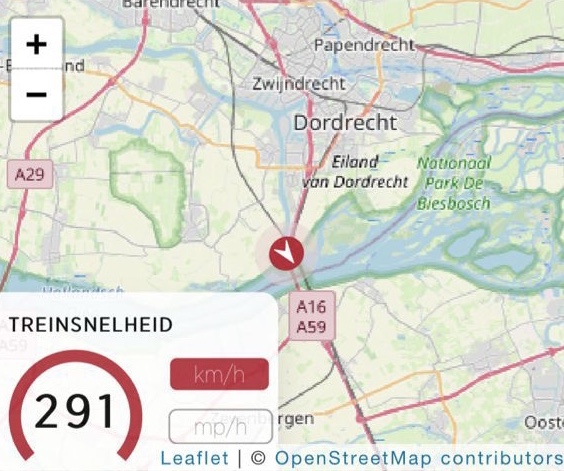
Speeding past my hometown Dordrecht

PS. Many authors are way better at this and give actual examples of how to do and book these journeys. For example, take a look at the Man in Seat 61, the corporate travel policy of Erasmus University Rotterdam, or the train operator with a not-too-bad booking page.

Call for participation

Are you 60 years or older, and have you cycled during your visit to Barcelona? Do you want to read more about our study? Consult this page about its vision and objectives, and about your opportunities to participate.

Why participate?

At the Rovira i Virgili University in Tarragona (Faculty of Tourism and Geography) we’re carrying out a research about sustainable mobility transformations in European tourist cities. We consult the views of Barcelona’s residents and visitors of 60 years and older, with the objective to improve the use of active travel options for people of all ages. Our main interest is in your experience when cycling in Barcelona and whether, in your opinion, it contributes to your feelings of health, wellbeing and satisfaction with the urban environment.

So share your experiences with us! It doesn’t matter if you are a frequent cyclist, just a beginner, or don’t use the bike as much as before. All views matter!

What will we do?

The research consists of three phases, two of which are optional in accordance to your possibilities and time restrictions. First, and for everyone, we will have a conversation about three things: 1) your experiences of cycling in Barcelona; 2) the modes of transport you have used throughout your life; 3) and your ideas about your mobility in future years. The conversation can be over coffee or lunch, during a guided bike tour through the city, or via a video call. If you have travel companions they are welcome to join!

After this first part, you are invited to participate in two exercises that record your mobility in the city. We will explain how to use your mobile phone to share geolocation data for inclusion in the study. In addition, we will record your daily mobility during a bicycle or walking tour, in which the researcher will join you during a journey of your choice. We will always give you the opportunity to comment on or explain the results obtained. Naturally, we will treat the data from these activities with the utmost security: see below for details about your anonymous participation and confidentiality.

When and where?

Contact the project coordinator by email (wilbert.denhoed@urv.cat) or fill in the registration form: https://forms.gle/36GxAcuHWZGHH1768. At your convenience, we can meet in person or via video call. If you cannot participate but would like to receive project updates, please fill in the form and indicate that you’re only subscribing to our mailing.

In application of the GDPR regulations, we inform you that the data provided will be included in the records of the ENTOURAGE project, carried out by the Department of Geography of the URV. You authorise the processing of your personal data to be sent information about the activities of the project. You will be presented with an information sheet and consent form to indicate your preferences. The data will not be transferred to third parties except in cases of legal obligation. You have the possibility of exercising your rights of access, rectification, cancellation and opposition of the data you provide, under the terms included in the current legislation, by writing to wilbert.denhoed@urv.cat.

Choose your preferred language to read more about the EN-TOUR-AGE project by clicking on a button below

Convocatoria

¿Tienes 60 años o más? ¿Te mueves en bici en Barcelona, lo has hecho, o te has planteado hacerlo? ¿Simplemente te interesa saber más? Consulta aquí sobre el estudio, sus objetivos y su visión.

Si quieres saber más sobre el estudio, consulta el texto abajo o ponte en contacto con el correo indicado. Gracias! (actualizado 01.2023)

¿Por qué?

Desde la Universitat Rovira i Virgili (Facultad de Turismo y Geografía) hacemos un estudio sobre las transformaciones de movilidad sostenibles en metrópolis europeas con atracción turística. Consultamos las perspectivas de la ciudadanía barcelonesa de 60 años o más, con el objetivo de mejorar el uso de la bicicleta y el espacio público para todas las edades. Nuestro principal interés es en tus experiencias con la bicicleta en Barcelona y en si su uso, en tu opinión, contribuye a la salud, el bienestar, y al ambiente urbano.

Si seas usuario/a de la bici de toda la vida, principiante, o hayas dejado de usar la bici, ¡comparte tu experiencia con nosotros!

¿Qué hacemos?

La investigación consiste en tres fases, dos de las cuales son optativas según tus posibilidades de comprometerte en el estudio. Primero, y para todos, tendremos una conversación sobre 1) tus experiencias de movilidad en ciclo en Barcelona; 2) los modos de transporte que has usado a lo largo de la vida y tu valoración sobre estos; y 3) tus ideas sobre tu movilidad en años futuros. Después, te invitaremos a participar en dos ejercicios que registren tu movilidad urbana en el día de hoy. Te explicaremos como usar el teléfono móvil para compartir los datos de geolocalización para incluirlos en el estudio. Además, tu movilidad diaria se registrará a través de un paseo en bicicleta o a pie, en el que el investigador se unirá a un viaje que sueles hacer en Barcelona. Siempre te daremos la oportunidad para comentar o explicar los resultados obtenidos. Desde luego, trataremos los datos provenientes de estas actividades con la máxima seguridad: ve abajo los detalles sobre su participación de forma anonimizada.

¿Cuándo y dónde?

Contacta al coordinador del proyecto por correo electrónico (wilbert.denhoed@urv.cat), o déjale tus detalles para ser inscrito en el mailing.

En aplicación del Reglamento General de protección de datos de carácter personal, se informa que los datos facilitados serán incluidos en el fichero del proyecto ENTOURAGE, llevado por el Departamento de Geografía de la URV. Asimismo, antes de participar comprobaremos tu autorización del tratamiento de tus datos personales para el envío de información sobre las actividades que provienen de dicho proyecto. Te presentamos con una hoja de información que explica todos los detalles del estudio y su compromiso de proteger los datos personales. Los datos no se cederán a terceros salvo en los casos de una obligación legal. Existe la posibilidad de ejercer los derechos de acceso, rectificación, cancelación y oposición de los datos que suministras, en los términos incluidos en la legislación vigente, mediante correo escrito dirigido a wilbert.denhoed@urv.cat.

Elige tu idioma para leer más sobre el proyecto de investigación EN-TOUR-AGE y sus objetivos